
30/04, Rebecca Horn. Inspirational for period of isolation and for final outcome
30/04, Rebecca Horn. Inspirational for period of isolation and for final outcome
30/04, Rebecca Horn. Inspirational for period of isolation and for final outcome
Interesting references about objectifying women, 21/04
19/04, feedback
The futurist cookbook, Marinetti / Carolee Schneeman, Meat Joy, 1964 / Miriam Schapiro and Judy Chicago The Dinner Party / Film – La Grosse Bouffe / Film - The Cook, the Thief, His Wife & Her Lover, Peter Greenaway / Sung Yeonju / Meret Oppenheim, Cannibal Feast, 1959 / Natalia LL Consumer Art / Martha Rosler Semiotics of the Kitchen / Sarah Lucas / Mika Rottenberg, Cheese / Stephanie Sarley, Fruit Art Video, 2015-ongoing /
28/03 , Tayaka
27/03, Book reference
18/04, cow costume by miguel vasllinas

23/03, bra burning movement
15/03, 'Can modern art be funny?'
These paintings are a joke: Can modern art be funny?
Tom Lubbock goes in search of a sense of humour at a new exhibition in London
These paintings are a joke: Can modern art be funny?

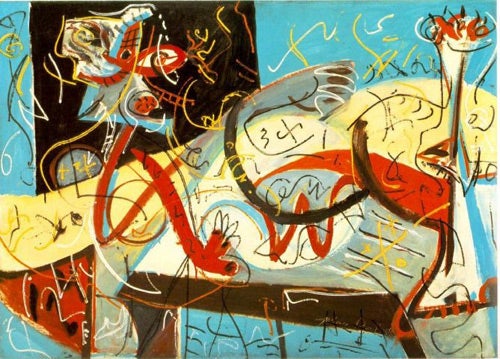
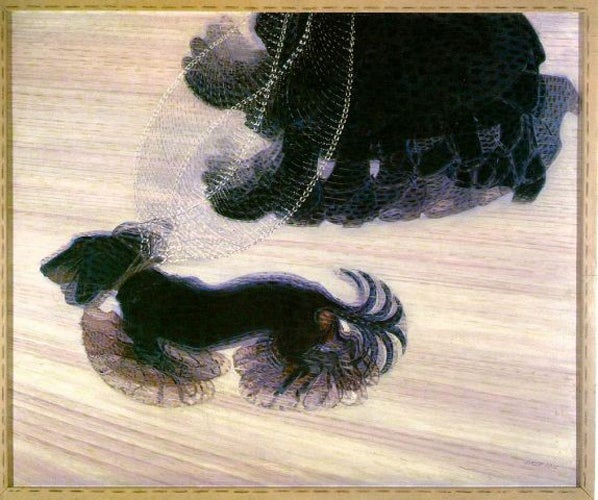
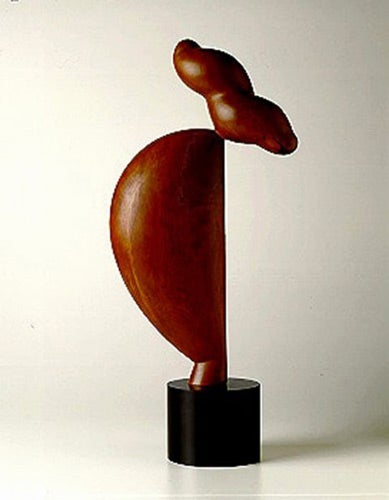
Laughing in A Foreign Language is the latest in a series of exhibitions staged over the last few years that deal with contemporary art and comedy, but it's the first to happen in Britain. It opens in London at the Hayward Gallery this morning, with work by the Chapman Brothers and David Shrigley among a cast of wits and pranksters.
As the gallery's director, Ralph Rugoff, explains: "Humour's expanding role in contemporary art is a result of many factors, but perhaps above all it represents a kind of allergic reaction to the legacies of Modernism."
The classic modern art of the 20th century now seems overbearingly high, heroic, serious, messianic. Contemporary art, by contrast, wants to play things in a lower, more knowing, more comical key.
There was also the strange and not accidental likeness between modern art and traditional comic art. A lot of 20th-century art drew on the vocabulary of cartoon and caricature. But it didn't want to be equated with such low cultural activities. No surprise then if modern art should turn out to be a comedy wasteland. That's certainly how we're often taught about modern art. Its comic aspect is firmly repressed. What look like funny faces aren't really funny. They are pure formal experiments, or they're an act of violence, or they're deeply disturbing. Anything so they're on the right side of serious.
Yet the picture is more complicated. And the proof of the pudding, as it always is with comedy, is in the laughing. Is modern art funny? My answer is yes – simply because I can think of some famous 20th-century works that seem to be genuinely and wholeheartedly funny.
When we look for comedy in modern art, we may well look in the wrong places. We think of Picasso's pictorial wit, for instance, the way he plays and puns with bodies and body parts. It's brilliantly inventive, but it isn't really funny. Or we may think of Marcel Duchamp's conceptual wit, his wordplay, his incongruous combinations of objects and incongruous titles. Again, it's often very clever and graceful, but not really funny.
It's the same with another likely candidate, Surrealism. The imagery is bizarre and fantastical and disturbing, and the Surrealists all firmly believed in the importance of humour. But there isn't much humour in their art – is there anywhere a less humorous artist than Salvador Dali? As for the artists of the Weimar Republic, like Georg Grosz and Otto Dix, they are certainly savage and bitter in their satire, but a laugh they don't often raise.
You see that I'm pursuing a fairly light ideal of comedy. There are those who will say that real humour is subversive, or liberating, or deeply unsettling. There have always been those who seek a moral role for the humorous. But the comedy I've been looking for is fundamentally lighthearted – gay, gleeful, irresponsible, the sort most likely to make you laugh.
Now, when I say these works of 20th-century art make me laugh, I don't claim that they make me laugh violently, uproariously, helplessly, painfully. I don't think comic art works like that – at least, not when it's trying to do some other artistic work at the same time. But they can certainly provoke a smile and a "hmph" and that feeling of mental constraint-and-release which is the essence of laughter. Some of the jokes are gross, some of them are urbane, some are madcap, some are deadpan – and the fact that I find them funny may only indicate that I have an excessively rarefied or an excessively simple-minded sense of humour. But the case can only be made with particular examples, chosen by a particular person.
04/03,»Formensport« – a dance performance based on Kurt Schmidt’s Mechanical Ballet
This performance is interesting as it breaks down the costumes to certain smaller more specific ones.
I could use a similar restrictive material technique of simply paper and cardboard first, then think more about color or fabric.
Also I should think closely about which limbs to make my costumes for...LIMBS WHICH PROVOKE INTIMACY. Hands, hidden body parts like breasts for women which indicate 'sex'
03/03, Bauhaus 'mechanical ballet'
I find this piece of work especially relevant to my work because it is the idea of changing movement and incidentally one's sense of interaction. I love the idea of a costume transforming the wearer's ability to move and way of intimacy with others.
The geometric shapes is something I want to look into as I could simply use things like cardboard boxes as a starting point here.
Their focus is 'man and machine' which also links to technology and how it affects us, our sense of intimacy, interaction.
23/02, Picasso and Paper exhibition
This piece stood out to me as the costume affected the wearer's movement and sense of human movement. This meant it had a restricting component which gave the costume a new sense and different dimension to basic visual costumes.
This idea of preventing movement links to interaction and intimacy, so i could experiment with how i create designs on the body to oppose human action, incidentally preventing movement and basic human interaction.
22/02, National portrait gallery.
'double self portrait' by Jane and Louise Wilson
This piece has camouflage patterns which scramble the face recognition software used to identify people in CCTV. The mirrored surface reflects the viewer who shifts his or her position from the subject to the object of surveillance.
I find this piece interesting because it is reflecting on pressing digital advances that look into who owns power, and even tend towards manipulation of control.
The fact we are all on CCTV daily and our lives are essentially monitered constantly is terrifying. This could link to our sense of interaction as it is showing us all as sort of futurtistic robots who can be controlled simply through our faces.
18/01, James Lee Byars, performative costume
'Five in a Dress' Intigues me as it is creating a single costume which is to be interacted and worn by multiple people as a way to connect them.
It is playing with interaction, connection, intimacy and costume/performance too.
I love the idea of using my audience in my piece, and still focusing on fabric experimentation ...Perhaps i could link this idea to mine of body liberation. Using bras, pieces of clothing that suspend women (or men even?) to create an interactive costume.
This piece is unique as the garment was cut up after the performance and pieces handed out to all the participents in order to connect them further. I could take this idea of belonging and connecting too.
in 'The artists book' it says:
''Byars described these events as 'thought in performance', bringing the anonymous individual literally into the context of his sculpture''

30/04, Rebecca Horn. Inspirational for period of isolation and for final outcome
MY REFLECTION
I am uploading various images of Rebecca horns pieces and interviews because I feel like i can relate to her thoughts rigjt now. She was isolated for nearly 2 years from lung poisoning and i always found it challenging to relate to this sense of imprisonment almost, restrictions definitely. But now, I can sense her feelings and anxiety almost as an artist, and I feel inspired that she created such interesting work throughout this time.
It has given my a final sense of inspiration and hope for continuing my outcome and also continuing my art after this submission.
She used her own body as he r medium which is what I must now do because models aren't accessible and perhaps this isn't bad? It will give a new perspective for my art and this sense of being forced could work to my advantage, especially if I incorporate new ideas and materials all the time using my own body as my medium.
rose english, quadrille, 28/04

MY REFLECTION:
I find this piece extremely relavant to my project because it is almost mocking the idea of objectifying women to be animals, and adding humour to performance art.
This idea of humour within art is something which I want to look into because it could add depths or remove meaning, I think it is a hard one and needs to be explored.
The fact the dancers are all in costume but it is playing off idea of wearing minimal/feminine aspects like heels, shows again a sense of irony which I find clever and inspiring. I love the fact the audience isn't expecting it at all, giving an element of shock which adds to the overall sense of being provocative.
It makes me want to explore with irony and humour. This could even be with adding sound to my performance pieces seeing as I can't do a public one, and want to use technology to my advantage.
I am going to play around with adobe premier pro and think how I can achieve the same sense of irony and humour like rose does here
20/04, the futuristic cookbook ARTICLE
Perfect Meal and an Anti-Pasta Manifesto circa 1932
Optimism at the table, or why the dark void of the soul can’t be stuffed with spaghetti.
BY MARIA POPOVA
 Given my voracious appetite for unusual cookbooks — especially ones at the intersection of food and the arts, including little-known gems from the likes of Andy Warhol, Liberace, Lewis Carroll, and Alice B. Toklas — I was delighted to discover The Futurist Cookbook (public library; AbeBooks) by Italian poet and editor Filippo Tommaso Marinetti, originally published in 1932 and reprinted in 1989, translated into English by Suzanne Brill.
At the time of its release, the cookbook became somewhat of a sensation, thanks to Marinetti’s shrewdness as a publicist. But while major newspapers like the Chicago Tribune proclaimed it a bold manifesto to revitalize culture by revolutionizing how people ate, what the media missed at first was that the cookbook was arguably the greatest artistic prank of the twentieth century — it wasn’t a populist effort to upgrade mass cuisine but, rather, a highbrow quest to raise the nation’s, perhaps the world’s, collective artistic consciousness.
 Filippo Tommaso Marinetti
In the introduction to the 1989 edition, British journalist, historian and travel writer Lesley Chamberlain calls it “a provocative work of art disguised as easy-to-read cookbook” and writes:
The Futurist Cookbook was a serious joke, revolutionary in the first instance because it overturned with ribald laughter everything “food” and “cookbooks” held sacred: the family table, great “recipes,” established notions of goodness and taste.
 Marinetti fighting a duel with the journalist Carlo Chiminelli in Rome, April 30, 1924. He was wounded.
What made Futurist “cooking” so revolutionary was that it drew on food as a raw material for art and cultural commentary reflecting the Futurist idea that human experience is empowered and liberated by the presence of art in everyday life, that osmosis of arte-vita. Marinetti himself framed the premise of the cookbook in his introduction to the original 1932 edition:
The Futurist culinary revolution … has the lofty, noble and universally expedient aim of changing radically the eating habits of our race, strengthening it, dynamizing it and spiritualizing it with brand-new food combinations in which experiment, intelligence and imagination will economically take the place of quantity, banality, repetition and expense.
This Futurist cooking of ours, tuned to high speeds like the motor of a hydroplane, will seem to some trembling traditionalists both mad and dangerous: but its ultimate aim is to create a harmony between man’s palate and his life today and tomorrow.
[…]
It is not by chance this work is published during a world economic crisis, which has clearly inspired a dangerous depressing panic, though its future direction remains unclear. We propose as an antidote to this panic a Futurist way of cooking, that is: optimism at the table.
 Filippo Tommaso Marinetti
Indeed, Marinetti saw food as the ultimate promise of optimism — a gateway to sensual freedom, imbued with the carefree lightness of a children’s party and the intellectual enthusiasm of a literary salon. He believed that “men think, dream and act according to what they eat and drink.” But nowhere did his culinary and cultural dogmatism shine more blazingly than in his contempt for pastasciutta, better-known simply as pasta — the traditional Italian staple beloved the world over. He preceded the modern low-carb craze by more than seven decades, outroaring even its most zealous contemporary adherents with the fanaticism of his convictions. Pasta, he asserted, made people heavy in both body and spirit, turned them sour and pessimistic, and robbed them of the creative impulse. The riddance from pasta wasn’t merely a matter of individual salvation — Marinetti even made it a matter of patriotism, arguing that the abolition of pasta would liberate Italy from the despotism of expensive foreign grain and instead boost the domestic rice industry.
He resolves in the cookbook:
Futurist cooking will be free of the old obsessions with volume and weight and will have as one of its principles the abolition of pastasciutta. Pastasciutta, however agreeable to the palate, is a passéist food because it makes people heavy, brutish, deludes them into thinking it is nutritious, makes them skeptical, slow, pessimistic.
[…]
[Pasta] is completely hostile to the vivacious spirit and passionate, generous, intuitive soul of the Neapolitans. If these people have been heroic fighters, inspired artists, awe-inspiring orators, shrewd lawyers, tenacious farmers it was in spite of their voluminous daily plate of pasta. When they eat it they develop that typical ironic and sentimental skepticism which can often cut short their enthusiasm.
Any pastascuittist who honestly examines his conscience at the moment he ingurgitates his biquotidian pyramid of pasta will find within the gloomy satisfaction of stopping up a black hole. This voracious hole is an incurable sadness of his. He may delude himself, but nothing can fill it. Only a Futurist meal can lift his spirits.
He then outlines the eleven requirements for the ideal Futurist meal:
One perfect meal requires:
- Originality and harmony in the table setting (crystal, china, décor) extending to the flavors and colors of the foods.
- Absolute originality in the food.
- The invention of appetizing food sculptures, whose original harmony of form and color feeds the eyes and excites the imagination before it tempts the lips.
- The abolition of the knife and fork for eating food sculptures, which can give prelabial tactile pleasure.
- The use of the art of perfumes to enhance tasting.
Every dish must be preceded by a perfume which will be driven from the table with the help of electric fans.
- The use of music limited to the intervals between courses so as not to distract the sensitivity of the tongue and palate but to help annul the last taste enjoyed by re-establishing gustatory virginity.
- The abolition of speech-making and politics at the table.
- The use in prescribed doses of poetry and music as surprise ingredients to accentuate the flavors of a given dish with their sensual intensity.
- The rapid presentation, between courses, under the eyes and nostrils of the guests, of some dishes they will eat and other they will not, to increase their curiosity, surprise and imagination.
- The creation of simultaneous and changing canapés which contain ten, twenty flavors to be tasted in a few seconds. In Futurist cooking these canapés have by analogy the same amplifying function that images have in literature. A given taste of something can sum up an entire area of life, the history of an amorous passion or an entire voyage to the Far East.
- A battery of scientific instruments in the kitchen: ozonizers to give liquids and foods the perfume of ozone, ultra-violet ray lamps (since many foods when irradiated with ultra-violet rays acquire active properties, become more assimilable, preventing rickets in young children,etc.), electrolyzers to decompose juices and extracts, etc. in such a way as to obtain from a known product a new product with new properties, colloidal mills to pulverize flours, dried fruits, drugs, etc.; atmospheric and vacuum stills, centrifugal autoclaves, dialyzers. The use of these appliances will have to be scientific, avoiding the typical error of cooking foods under steam pressure, which provokes the destruction of active substances (vitamins, etc.) because of the high temperatures. Chemical indicators will take into account the acidity and alkalinity of these sauces and serve to correct possible errors: too little salt, too much vinegar, too much pepper or too much sugar.
Marinetti proceeds to offer several dozen colorfully titled, highly performative Futurist recipes compliant with these criteria. Her are a few favorites:
IMMORTAL TROUT
Stuff some trout with chopped nuts and fry them in olive oil. Then wrap the trout in very thin slices of calves’ liver.
HUNTING IN HEAVEN
Slowly cook a hare in sparkling wine mixed with cocoa powder until the liquid is absorbed. Then immerse it for a minute in plenty of lemon juice. Serve it in a copious green sauce based on spinach and juniper, and decorate with those silver hundred and thousands which recall huntsmen’s shot.
DATES IN MOONLIGHT
30–40 very mature and sugary dates, 500 grams Roman ricotta. Stone the dates and mash them well (all the better if you can pass them through a sieve). Mix the pulp thus obtained with the ricotta until you have a smooth poltiglia [mush]. Refrigerate for a few hours and serve chilled.
AEROFOOD
The diner is served from the right with a plate containing some black olives, fennel hearts and kumquats. From the left he is served with a rectangle made of sandpaper, silk and velvet. The foods must be carried directly to the mouth with the right hand while the left hand lightly and repeatedly strokes the tactile rectangle. In the meantime the waiters spray the napes of the diners’ necks with a conprofumo [perfume] of carnations while from the kitchen comes contemporaneously a violent conrumore [music] of an aeroplane motor and some dismusica [music] by Bach.
28/03, Breakfast dress - Dame Edna Everage, featured at the V&A theatrical performance exhibit
This is linking to my theme of 'food as costume' - Seeing women as something to eat, rather than human beings.
I like the way this garment works as something to actually wear and is not just food placed on the body.
I am interested in creating actual wearable garments (if just short term) as this creates a more real effect.
25/03, ARTICLE, how media/technology affects society with covid-19 pandemic
The pandemic infodemic: how social media helps (and hurts) during the coronavirus outbreak


 The world is on standby for a pandemic / Photo by CDC on Unsplash.


Right now, the world is battling a coronavirus epidemic. It started in December 2019, when a group of people from China’s northern Hubei province developed an unexplained pneumonia-like condition. By the end of the month, the local scientific community managed to pinpoint the source of the disease and establish its link to the SARS virus that terrorized the world 17 years ago.
As 2020 rolled around, the outbreak turned into an international pandemic. Each new country the virus spread to fuelled panic and demand for information regarding the disease. As a result, social media became both an indispensable source of vital information and a fertile ground for dangerous rumour-mongering, with claims of equal shock value but varying truth making big waves across the world. The WHO Director-General even stated: “We’re not just fighting an epidemic; we’re fighting an infodemic.” This situation is the testament to the raw power of social media, and a sign of how much we achieved when it comes to curtailing the spread of dangerous lies online. Let’s talk about it.
Pandemics of the social media age
The coronavirus outbreak wasn’t the first to arrive in the age of social media: at least three other international pandemics occurred in the ten years preceding it. The H1N1 (swine flu) pandemic, the Ebola epidemic and the Zika outbreak all had prominent, and widely documented, influence on social media conversations. Just ten years ago, NGOs weren’t necessarily well-equipped to communicate risk information online. The people used social media to look for directives, but unreliable and/or unofficial sources had the loudest voices.
By the time 2014 arrived, health organizations were much better prepared to launch their campaigns, and influencers helped them get exposure. But the social networks themselves had trouble identifying malicious actors and dealing with misinformation. These days we’ve made tremendous progress. Social networks have matured in terms of their functionality, big organizations got better at communicating online, and, following the large-scale misinformation campaigns of 2016, people have gotten a bit better at telling truth from fiction. So, what role does social media play in this unfolding story?


Source of verifiable information
China, famously unprepared to take the stage during the 2009 H1N1 outbreak, learned its lesson, being upfront and transparent about the coronavirus situation on social media. In the days following the initial news, there was no shortage of verifiable information from official Chinese sources.
WHO and other public health organizations also use social media to inform the public about the outbreak, and control the panic. Of course, it doesn’t mean that misinformation is not being circulated among social media users. For many people, conspiracy theories are a natural response to the senseless cruelty of this crisis. They offer clarity and an opportunity to blame someone for the havoc. So it’s not unreasonable that a number of dangerous conspiracy theories 'blew up', offering interesting, albeit completely incorrect ways of viewing the situation. Some claim that the virus is a biological weapon, created by either the US (to kill Chinese people) or China (to kill Americans). Some claim that the outbreak was orchestrated by big tech - to undermine China’s status as the world capital of high-tech manufacturing.
Social media websites are actively fighting this misinformation and fearmongering. Chinese tech giants, already well-versed in censorship, put their tools to good use to prevent the spread of such lies. The creators of WeChat — China’s number one social media platform — are using a popular fact-checking platform to dispel harmful misconceptions. Western websites, such as Twitter, Facebook, and Instagram, are also actively working to ensure that only correct sources get amplified. When people search for ‘coronavirus’ on these platforms, they’re less likely to encounter any unsubstantiated claims than they would during the recent Zika crisis. Content from ‘reputable’ accounts is given priority, while amateur claims are being scrutinised and factchecked. (ISSUE OF FAKE NEWS)
Of course, no fake news — filtering algorithm is perfect. As coronavirus became a trending topic, many people tried to profit off its popularity in ways that couldn’t have been predicted. Several teen bloggers pretended to be infected to elicit shock from their peers, pity from their online followers, and, most importantly, clicks. Stunts like these cannot be controlled as well as the claims of international conspiracies, but they’re still largely illegal — and the perpetrators are likely to face consequences for their acts of sowing panic on purpose.
Method of communication
Multiple cities in the Hubei province are on lockdown to prevent the spread of the virus: more than 50 million individuals are prevented from leaving their cities. Around the world, those suspected of harbouring the disease are quarantined inside their homes or in medical institutions. In these conditions, social media serves as the only reliable way for the victims of this virus to communicate with the outside world. The demand for first-hand information about the outbreak fuelled the popularity of coronavirus vlogs.
People are eager to tell their stories and document their daily lives in the face of this deadly disease. This particularly applies to people in highly isolated environments, such as that of the Diamond Princess cruise liner — a coronavirus-infected ship. It was on lockdown for most of February, with more than 3500 people onboard, including 700 coronavirus patients.
The passengers weren’t allowed to mingle, and only a few were evacuated. In the face of this horror, social media was the only way for the passengers to stay in touch with their families and the world at large. They made vlogs, blogs, and appeared on live TV from the eerie comfort of their cabins. Chinese citizens, particularly those who live in the North, avoid going outside and use social media to curtail the risk of being infected. They can keep in touch with their friends, get the latest news, and order food thanks to social media. (TECHNOLOGY CREATES A NEW PLATFORM OF INTIMACY)


Support infrastructure
Social media has also been instrumental in helping improve the situation.
Like other similar disasters, it gave birth to a fair share of online fundraisers, both within China and outside its borders. People are giving money to struggling hospitals, as well as individuals at risk of dying from the disease. Big companies like Western Union and Tencent are also joining in, encouraging their clients and users to donate to the cause.
Scientists are using social media tools to collaborate. The coronavirus genome was openly published early on during the outbreak, allowing thousands of researchers to brainstorm possible solutions, cures and explanations.
Regular people can simply use social media to provide moral support to those affected by the deadly virus. In a typically Chinese display of solidarity, WeChat users from across China published pictures of their local food in support of those in Wuhan. (MENTAL INTIMACY)
Finally, social media provides a sort of collective grieving space. Events like these can be hard to process psychologically, and even harder to make sense of. When one of the scientists to first discover the virus succumbed to the disease, his death sparked conversations about the selfless bravery of people fighting the outbreak. His memory was honoured by thousands of netizens. (CREATES HUMAN COMMUNITY)
Takeaways
Whereas the coverage of earlier pandemics’ social media influence was largely focused misinformation, it wouldn’t really be fair to do the same here.
Social networks are doing their part by creating new tools to tackle fake news and conspiracy theories. At this point, they’re doing more good than bad to help people affected by the virus. They fuel scientific collaboration, create fundraising opportunities, and — perhaps, most importantly — helps the quarantined people overcome their isolation.
Social media can be an unstoppable force, especially in times of crisis. MNFST, our crowd promotion platform, can help your brand leverage it, and generate genuine excitement for your product
29/02, 'Behind', Carlos Bunga
This piece stood out to me as it incorporates performance, intimacy and space/scultpure.
Bunga is breaking the 3D canvas in order to interrogate the relationship between the painter and space. I find it interesting because I want to know what is inside it...Apparently that isn't the artists' aim but it gives me an idea to create an intimate space which could be worn that actually has something inside. Maybe intimate materials or something, like slime, which the wearer can feel and no one else can. Idea: Intimacy between the wearer and the costume
27/02 , What effect has the internet had on our sex lives?
What effect has the internet had on our sex lives?
Sex is everywhere on the web and you're most likely familiar with such content, whether you are a purveyor or you've stumbled across an article or television show that claims the new technology corrupts society by exposing us to unheard-of sexual practices involving harnesses and balloons. These exposés are then usually followed by detailed descriptions and photos of the harnesses and balloons.
It is true that one in 10 websites features pornographic material, and also that you need only to barely scratch the surface of the upstanding face of the web to find communities gathered around all kinds of debased kinks. But when it comes to reflecting on the impact of online sex on our offline lives, there needs to be less sniggering and fewer accusations about social corruption. The politics of sex are being transformed by the web.
Our exposure to a seemingly bottomless pit of debasement doesn't mean we're becoming more adventurous, however. Dr Petra Boynton, a sex educator and online relationship agony aunt, says that people still come to her with exactly the same questions and concerns that they always have – men about their anatomies and women about their relationships – it's just that the language they use now is more explicit. And there's no evidence that people who meet online are more likely to hook up quicker than people who meet offline. "Places like Facebook haven't caused an outbreak of infidelities," she says. "It simply enables people to meet up and form relationships."
Does this make the web the ultimate sex toy? Sure, on the surface, there's plenty online you can get off on, but sex isn't just the physical manifestation of stimulation; there's an important mental element involved as well. And the web is all about helping people establish emotional connections. Throw in some erotic imagery, augmented teledildonics technologies, or a bit of sexting or Skyping, and you have the makings of a rather extraordinary, albeit mediated, relationship. Boynton believes that is far more intimate than what you can get from the pages of a magazine and reflects more closely the entirety of the sexual experience. This is potentially transformative.
"If you are using old-media porn, it's something someone makes for you and you pick what appeals to you," she says. "The web permits you to write your own stories, describe your situation, inhabit another character, expand on existing stories, detail your sexual life through blogging or create your own." Interestingly, the sexual content that people generate is pretty traditional, despite the library of kinks that can potentially inspire us.
This interactive relationship with explicit content offers the possibility of ushering in a new age of sexual enlightenment: by having the opportunity to get involved with and generate sexual material, people are learning to express themselves as sexual beings and to develop a deeper understanding of what does and doesn't excite them. But in a culture that ridicules, vilifies and commercialises sex, this is laden with politics.
Here's a classic example: a recent Panorama documentary that examined the sexualisation of British children ignored the effects of the web on girls' blossoming sexuality, suggesting instead that online content was only changing boys' attitudes and behaviours; girls, proposed presenter Sophie Raworth, were being sexualised at a younger age because of fashion and pop music. Yet girls and women often express their sexuality on blogs or websites and they are exposed to the same kinds of online material as the boys. Why the disparity?
"There's an idea about how women express sex and sexuality," says journalist Zoe Margolis, the sex blogger outed as The Girl With a One-Track Mind, "and there's a real double-standard about how women are able to portray themselves online."
Generally, the focus of discussions about sex online tends to be on possible dangers, rather than on enlightenment or mental intimacy. The experience most people have is of searching for information about psychosexual problems, not looking for a good time. Yes, the kinks are out there – they always have been – but there is no evidence that simple exposure to the vast database of online fetishes has sexualised our society any more or less than previous media have. If anything, it's reversing the trend towards commercialisation. Online interaction, frank discussion and play are transforming our sexualities. The result will, with luck, be sexual enlightenment rather than social destruction.
ARTICLE FROM https://www.theguardian.com/technology/2011/feb/06/internet-porn-sex-lives
MY REFLECTION
I find this extremely interesting beceause it actually changes my view that technology is perhaps negitively affecting intimacy and preventing it.
Here, the article gives the positive effect of technology on intimacy, saying that now we have more resources to find out more sexually, and have things like social media in order to find intimate partners sooner too. Therefore our sexual lives have been transformed for the better.
The one possible issue hightlighted is in terms of effects on women specifically,and also linking to porn.
For instance, women are often shamed for how they present themselves sexually yet also women are used in porn often as sexual objects. They are objectified on one hand, yet dismissed on the other one. It is as if women can't express themselves sexually in a moral manner, yet men are allowed traditionally to use resources for their own pleasure.
Advances in technology have allowed women to have access to sexual content like porn as traditionally only males were considered able to pleasure themselves over sexual content. This in itself is positive for women.
However, this doesn't change life outside technology in my opinion. cat calling and sexual harassment is still a major issue, even if women are getting certain equalities from online development.
I want to focus on this because to me it is something that is often overlooked...the way the male gaze is, the misinterpretated sense of intimacy.
30/04, "LE FESTIN" OR "CANNIBAL FEAST" BY MERET OPPENHEIM

MY REFLECTION
I love this idea and the way it is so provocative and effective yet is such a simple idea, no fancy technology or money invested into it. It links very well to my theme of the male gaze, and how women are viewed in society due to media and traditions as objects, even food.
The way the female body is used so effectively inspires me as I want to use the body as my canvas. However here they have brought other people into the piece which makes the piece a lot more provocative and actually make sense? I didn't think of bringing various people into my outcome, this is an idea to try out in my photography and video as it could add another depth, like it does here.
Therefore I will think how I can incorporate my family into my performance ideas seeing as I can't meet any friends or get models elsewhere.
reflecting on instagram research, 29/04
MY REFLECTION
Although I love the idea of wearing food and creating edible clothing, I feel like these pieces don't quite get across the same sense of being provocative as some of the other pieces I have researched, eg rose's quadrille, do.
However I love the fact the artist uses Instagram as their platform as this gets their pieces across a wider population than a normal gallery would, and obviously is great for now in isolation. technology is the only way we can communicate and find inspiration.
I want to try more edible costumes as they are clear and successful however I will incorporate performances or video too so I can be more provocative
18/04, miguel vallinas

I like the fact the costume is the focus and everything erolves around its shape, funciton. The idea of the dress as a table is clever and innovative.
28/03, Karla Powell
This research helped me think about what food would be best to work with as a material for costume making, what will stay in place and what might melt or cause a mess.
I want to stick to theme of creating communication without physical intimacy which reflects on technology's handling of Covid-19.
And, iw ant to make my piece provocative and link to the effects of the male gaze, and ways women are constantly objectified as animals/food..eg beauty contests.
So I will stick to theme of lingerie, and start with simple foods like spaghetti and see what happens.
Here I love the lobster most as it fits the face shape. I must put more thought into what works with the body shape.
27/03, Mathew Barnee Aimee Mullins, 'Intimacy; between me and the ground there was nothing'
This image shows body extensions in the form of prosthetic legs...and shows an intimate scene between 2 people with artificial legs.
The title could refer to the LACK OF INTIMACY between the prosthetic leg and the ground. A sort of numb feelings, false sensation, no physical intimacy.
From 'the prosthetic impulse' book referenced next.
09/03, Valie Export
Summary of VALIE EXPORT
ARTICLE FROM https://www.theartstory.org/artist/export-valie/
VALIE EXPORT's work is expressly political, questioning the ways in which society functions, and particularly how women are perceived and treated. She is recognized as one of the most important early feminist artists, who reconsiders the ways in which the body is presented and challenges its representation as passive in conventional film and media, offering complex and challenging depictions of women's experience. Developing her practice during the 1960s in an Austria that was still coming to terms with its role in the Second World War, and influenced by Viennese Actionism, her early work consisted of performances in which she challenged public audiences with sexualized actions that asked them to examine women's experience, with a focus on the ways in which their bodies were subject to the male gaze in cinema. She explored these ideas in a range of mediums, taking an approach that encompassed different styles and techniques in her practice and writing texts that outlined the importance of feminism in art and film. Over her long career she has continued to make work about gender and society and to teach on avant-garde practice and its relationship to political work.
- EXPORT sees the body as an artistic material - she is interested in undermining the conventions of representing women's bodies in various ways, including offering her body to strangers to touch, exposing her genitals to her audiences, pointing out the ways in which femininity is constructed, and portraying the ways in which relationships ask women to adopt certain roles. She works with performance and film in order to consider the realities of women's bodies, rather than their fantasy depictions.
- The name VALIE EXPORT is an important part of her practice, adopted by the artist in 1967 it represents her rejection of patriarchal structures. Her new name was created as both a new, self-fashioned identity and an artistic concept, with VALIE an alternative spelling of her nickname (Walie) and EXPORT inspired by the branding on the pack for Smart Export cigarettes. It was the term 'Export' that had most significance for the artist; she saw the gesture as exporting her identity in order to create something entirely new.
- EXPORT is known for her development of a version of 'expanded cinema', a way of thinking about film that explores the possibilities of the medium beyond the projection of a film strip on a screen. Encompassing performance, photography, and interactive installations, as well as avant-garde cinematic techniques, EXPORT wants to make film a more interactive, intersubjective experience, rejecting the passive experience of the cinema and instead asking the audience to be actively involved in the work.
MY REFLECTION:
- I love her ideas behind her work: Idea of reflecting on the 'male gaze in cinema' and showing reality of womens bodies rather than how they are depicted as a fantasy, is fascinating and highly relevant.
- The idea of actually getting strangers to interact by touching her own body: brave, clever and very provocative. This must have got people thinking for sure...And this is what she wanted.
- the idea of 'expanded cinema' highly links to my work as i want to use interaction and performance to further connect with my audience too.
- Makes me think i could make a costume which my audience touches, or perhaps i could make a costume for multiple people.
Tayaka reflection
I love the way this artist creates wearable art through only using food, a material not associated with wearability.
However I feel her work to be only visuallg pleasing and less so provocative, as in it doesn't make me think or feel anything rather than 'this is beautiful and creative'.
Perhaps this is because of the colours and type of food used. For instance I could use meat and it would definitely give a different feel
Also the placing of the food. She mainly makes headpieces which isn't as intimate as lingerie for instance. Therefore it makes me want to experiment different parts of the body to create different reactions.
Bring provocative is crucial for my art especially in a time of isolation where communication is more important than ever before.
04/03, Bauhaus inspired work ARTICLE

02/03, slime recipe
Slime recipe
This method makes a ball of flexible slime close to silly putty in texture. It stays clean in your hands, making it a good choice for little kids. If you want your slime gloopier and more stringy, see the troubleshooter below.
Makes 1 small ball
Takes 10 minutes
- 100ml PVA white glue (children’s craft glue or CE marked glue)
- ½ tsp bicarbonate of soda
- gel food colouring
- 1 tsp contact lens cleaning solution
- glitter (optional)

1. Squeeze the glue into a mixing bowl (look for a bottle in a 100ml size if possible so you won’t have to measure it out). Add the bicarbonate of soda and mix well.
2. Add a drop or two of your chosen gel food colouring. Less colouring gives a pastel colour; the more you add, the brighter the colour. Mix until well incorporated.
3. Add the contact lens solution and mix. The slime will begin to form, going stringy before coming away clean from the bowl into a ball.
4. Once it has formed, take it out and knead it with your hands. It will be sticky at first but after about 30 seconds you’ll have a smooth and pliable ball. Add glitter at this point, if desired, and work in with your hands. Store in a pot with a lid.
WITH HINDSIGHT: this wouldn't work onto a box as a material, but perhaps i could take this idea later on if i want to do something interactive like people put their hands into boxes: linking to 'just look, please touch' piece
29/02, Whitechapel exhibition
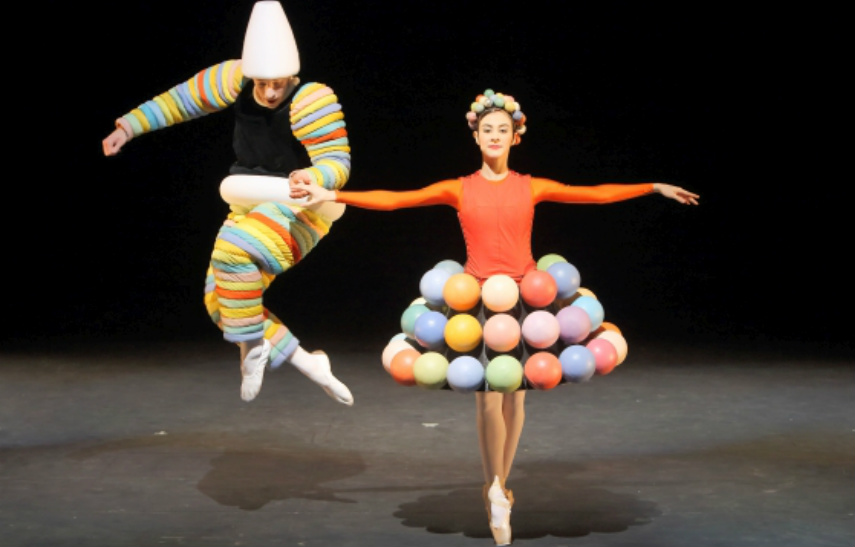
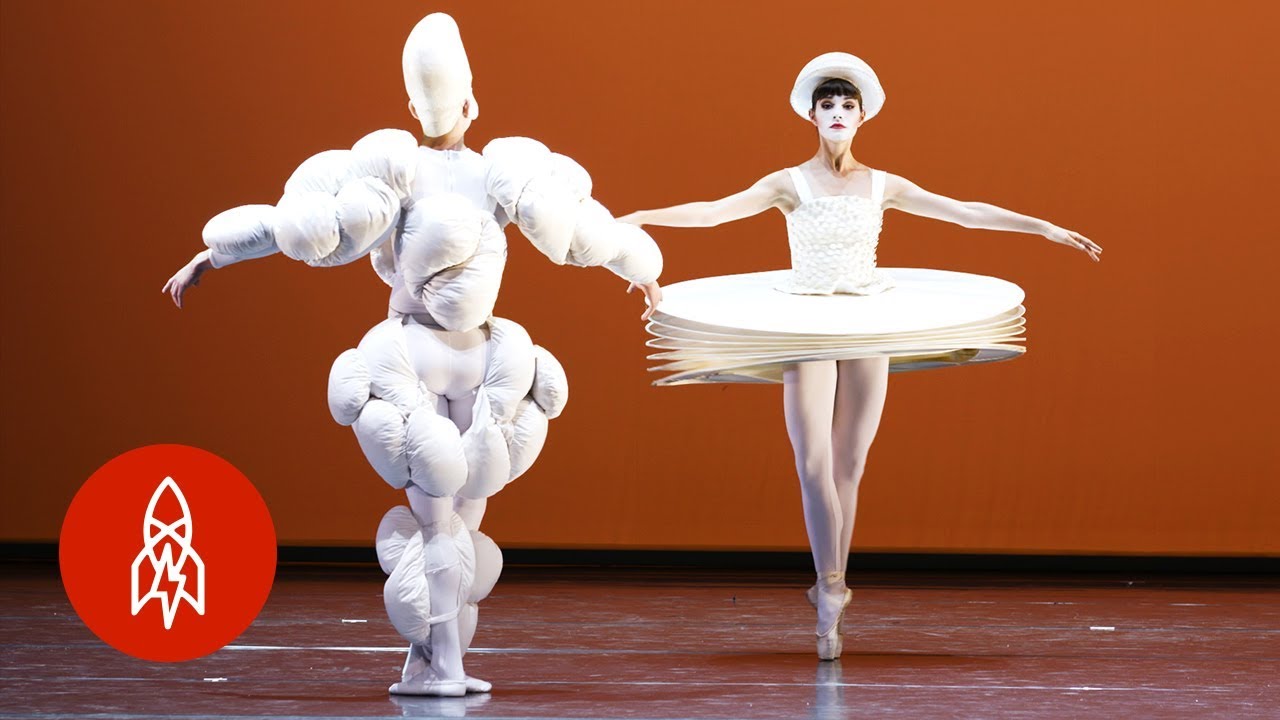
20/02, Bauhaus 'triadic ballet' costumes for performative art
Oskar Schlemmer – Das Triadische Ballet (A 1970’s Remake of the 1922 Piece)
Translating Forms, One Into Another
Even though Performance Art officially started existing within the Futurist movement, Bauhaus was the first official institution to recognize it’s difference from other forms of art and to offer it as a field of study which would unite all ideas behind the manifesto of the school itself. As much as the entire movement is known mostly for the innovative approach to design, the influence of these first avant-garde performances can not and should not be overlooked when taking into consideration the influence of the Bauhaus philosophy on an entire contemporary art development in the 20th and 21st century. Truly interdisciplinary and innovative in the approach not just to design but also performance, it marked a whole new beginning of exploring the connection between different art forms, of translating one art form to another, of thinking differently about the everyday movements which can become art; one of the key ideas standing behind the performances later explored in the Black Mountain College which truly marked an opening of the recognition of performance art in the second half of the 20th century. In 2019, the school is celebrating 100 years of existence and the will be organizing an experimental, transitional and radically contemporary Bauhaus celebration titled Die Welt neu denken (Reconsidering the world), which will examine the influence of the school on a whole century of art in all of its forms.[
The idea of “theatre of space” is used to highlight twentieth-century practitioners who privilege the visual, aural, and plastic qualities of the stage above character, narrative and, themes (for example Schlemmer himself, Robert Wilson, Tadeusz Kantor, Robert Lepage).
ARTICLE FROM:
https://www.widewalls.ch/bauhaus-school-performance-art/
MY REACTION
the idea of creating costumes, a set and making my own recorded performance highly appeals as i want to work with the human body alonside fabric/movement experimentation. The conceptual costumes designed here are intruiging and their shapes are highly provocative, unusual ; this interests me.
i know for part 3 i want to focus on performance, and look further into how to communicate and connect with my audience: interaction? Live performance?
Regarding themes, that is what i need to narrow down on. The idea of futuristic world appeals and would make costumes more exciting...perhaps i could look at the future of our society in terms of the digital world as i have focused on this throughout part 2. Looking at intimacy again but further in depth as i loved this project.
20/02, Bauhaus 'the gesture dance'
The Gesture Dance (1926-27)
One of the most important pieces which shows the translation of his theory to practice was the Gesture Dance from 1926-27. This performance combined the complexity of geometric and predefined gestures with the banal everyday actions such as sneezing, laughing and listening. In order to create the performance, Schlemmer actually prepared an entire notation system which visually described every gesture to be made, built up trough linear patterns. These directions were then followed by three figures; dancers dressed in primary colors; red, yellow and blue. This was a perfect way to examine the possibilities of moving from one medium to another; from the two-dimensional surface to the plastic; from graphic notation and painting to the human body and it’s possibilities. Every performance was then prepared in a similar manner; starting from the abstract signs, design, geometric structures and predefined linear paths which were created in the form of paintings, and then practicing these ideal abstract concepts in reality, by working with the dancers on stage.[4]

02/03, fettish disorder article
Fetishistic Disorder
Fetishistic disorder is an intense sexual attraction to either inanimate objects or to body parts not traditionally viewed as sexual, coupled with clinically significant distress or impairment.
The term "fetishism" originates from the Portuguese word feitico, which means "obsessive fascination." Most individuals find particular nongenital bodily features attractive, indicating that some level of fetishism is a normal feature of human sexuality. However, fetishistic arousal may become a problem when it interferes with normal sexual or social functioning, or when sexual arousal is impossible without the fetish object.
According to the DSM-5, fetishistic disorder is characterized as a condition in which there is a persistent and repetitive use of or dependence on nonliving objects (such as undergarments or high-heeled shoes) or a highly specific focus on a body part (most often nongenital, such as feet) to reach sexual arousal. Only through use of this object, or focus on this body part, can the individual obtain sexual gratification. In earlier versions of the DSM, fetishistic disorder revolving around nongenital body parts was known as partialism; in the latest version, partialism was folded into fetishistic disorder.
Since fetishes occur in many normally developing individuals, a diagnosis of fetishistic disorder is only given if there is accompanying personal distress or impairment in social, occupational, or other important areas of functioning as a result of the fetish. People who identify as fetishists but do not report associated clinical impairment would be considered to have a fetish but not fetishistic disorder.
Common fetish objects include undergarments, footwear, gloves, rubber articles, and leather clothing. Body parts associated with fetishistic disorder include feet, toes, and hair. It is common for the fetish to include both inanimate objects and body parts (e.g., socks and feet). For some, merely a picture of the fetish object may cause arousal, though many with a fetish prefer (or require) the actual object in order to achieve arousal. The fetishist usually holds, rubs, tastes, or smells the fetish object for sexual gratification or asks their partner to wear the object during sexual encounters. LINK: INTERACTIVE COSTUME, CONNECTING WITH SENSES
Inanimate object fetishes can be categorized into two types: form fetishes and media fetishes. In a form fetish, the shape of the object is important, such as high-heeled shoes. In a media fetish, the material of the object, such as silk or leather, is important. Inanimate object fetishists often collect the object of their favor.
Fetishistic disorder is a much more common occurrence in males than in females—in fact, the DSM-5 indicates that it appears almost exclusively in males. LINK: THE MALE GAZE
Fetishism falls under the general category of paraphilic disorders, which refers to intense sexual attraction to any objects or people outside of genital stimulation with consenting adult partners.
19/01, Louise Bourgeois, 'Costume for a banquet'
This costume reflects the artists desire for powerful femininity in order to combat patriachal abuse. The round structures are a key theme in her work and represent breasts but could also link to castrated testicles, as this artist was inspired by mythological ideas of greeks sacrificing males and castrating them too.
I like the fact Louise has used shape to make the audience think, and also the fact she has publicly performed her costume.

I wonder how i could develop the idea of interaction if i wanted to make a costume like louise has done. A costume which represses its audience links to bras and using clothing in history to surpress women. This idea interests me. Even the skirt thing that restricts movement(i must look this up)
This piece makes me think about setting for my performances...THere is a reason this is in the public streets, the artist wants to connect with normal society and daily life rather than just in a gallery setting. i must think carefully about where i want my further costumes or performances to be performed.